
Mayana Trip 2026 [🇳🇦]
Morokeni!
nafter many years, the time had finally come again: in late July, an MCP Friends team set off for Mayana. For chairwoman Katharina and treasurer Andreas, it was a reunion after four years; for Sabine, even after twelve years. Florian was along for the first time and was able to discover Mayana, its people, and our shared work there completely afresh.
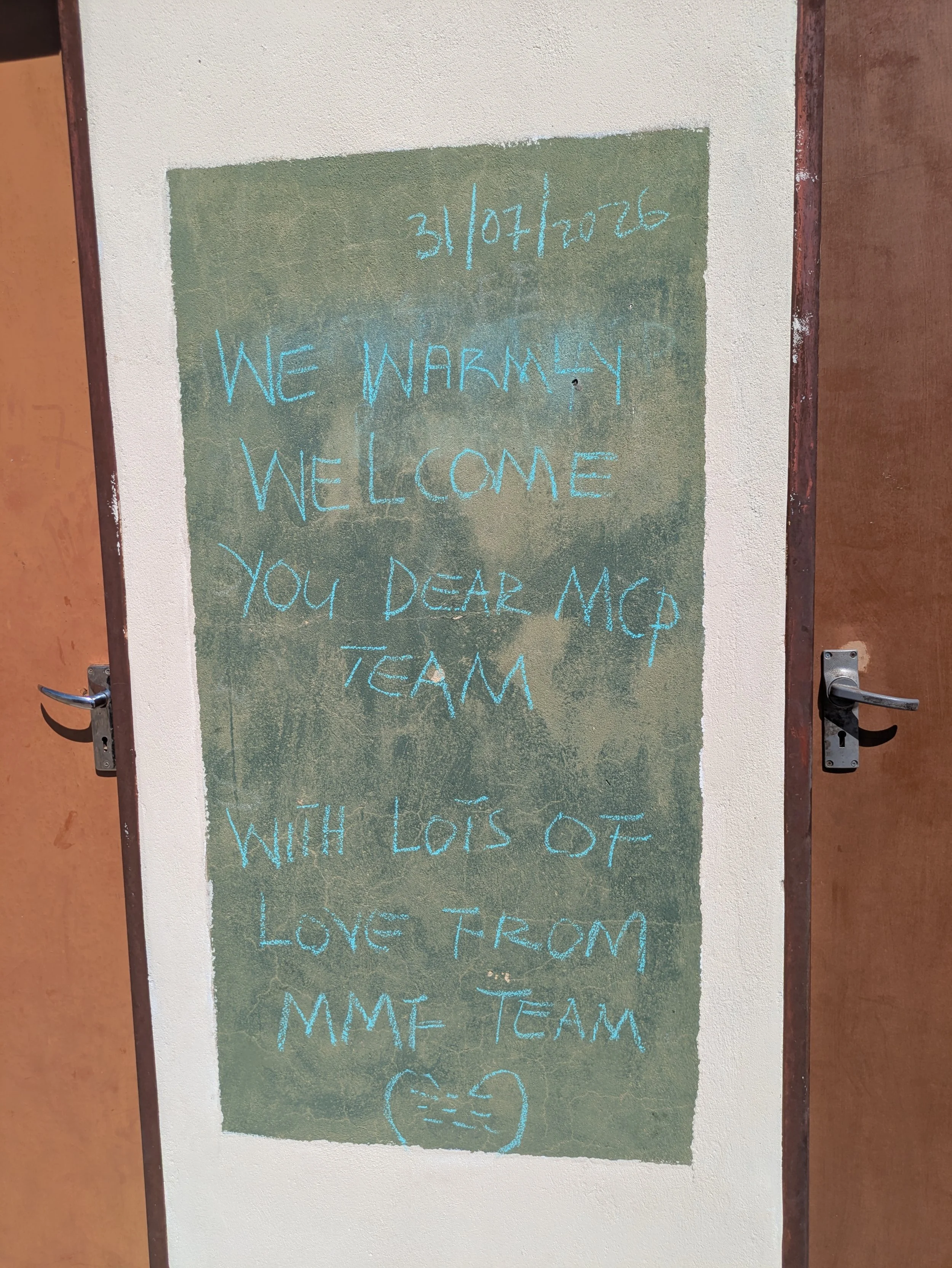
After a long drive, we were warmly welcomed at the MCP Guest House by the team of the Mayana Meho Foundation (MMF). In the evening there was a traditional meal of “pap” (millet porridge), vegetables and sardines – and, above all, plenty to talk about. It was wonderful to see familiar faces again and, at the same time, to meet in person those we had so far mostly known through conference calls.
Already the next morning, it became clear to us: A lot has changed in Mayana!
Water Changes Lives
Perhaps the most important change we saw right away, on our tour of the village led by Joseph Mbamba: a water pipeline now runs from the Okavango all the way to the fields. The pump runs on solar power. The fields are now worked with sprinkler and drip irrigation, which has made farming less dependent on rain. Alongside millet, vegetables can now also be grown (mainly beans, onions and cabbage).
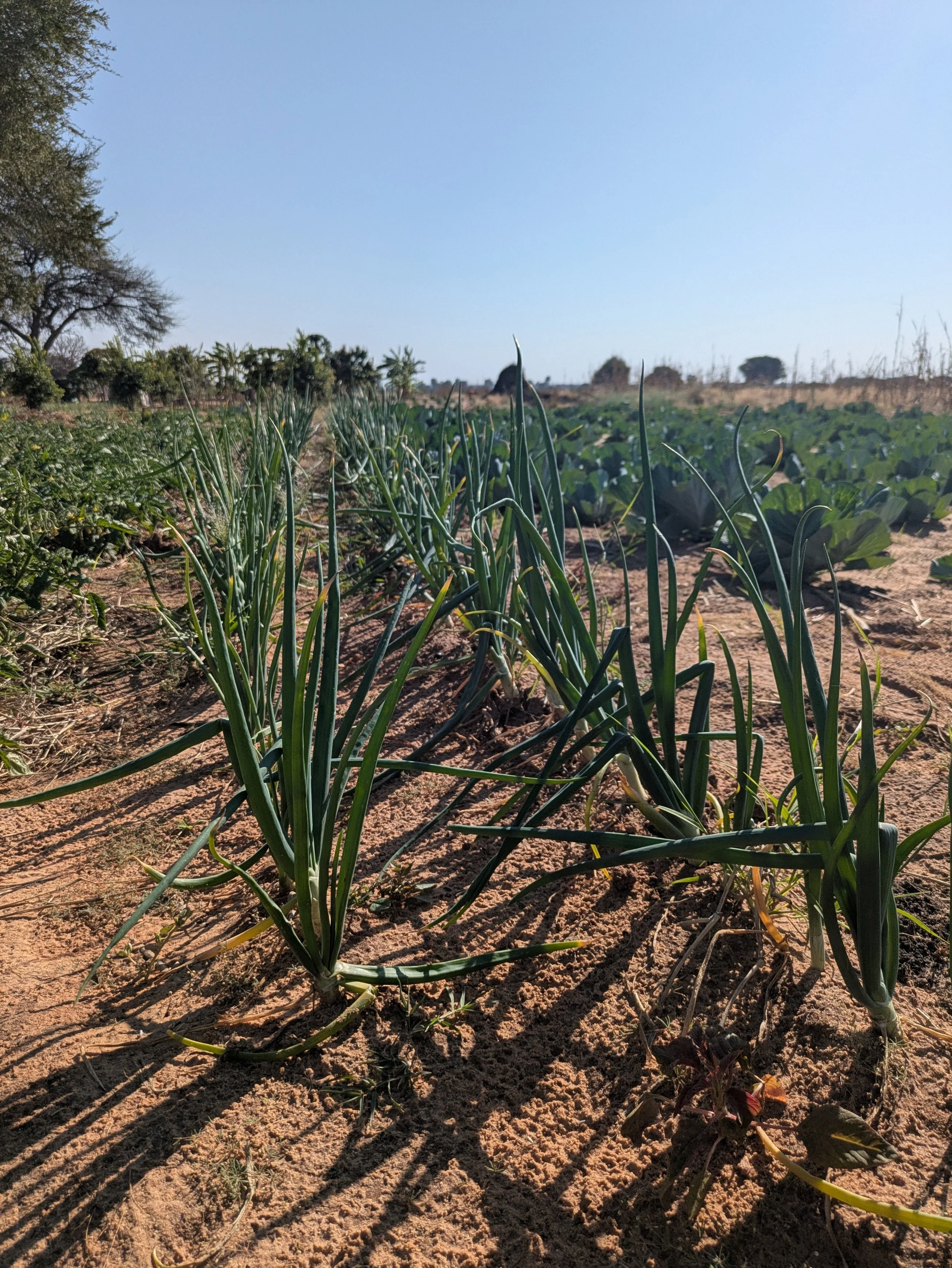
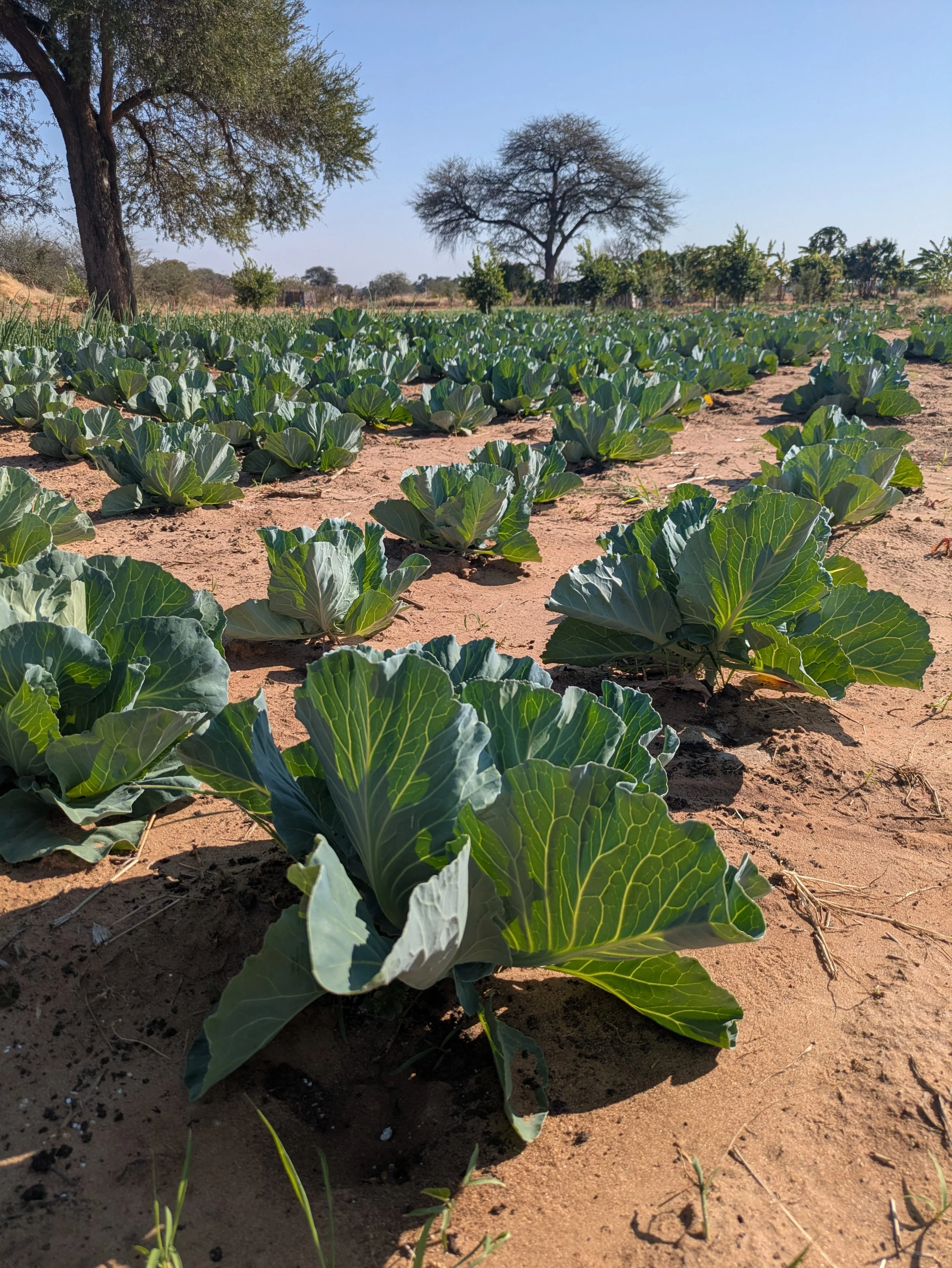
A view across the irrigated fields
In the community garden that belongs to the irrigation project, we planted a variety of fruit trees: bananas, guavas, papayas and mangoes.
We bought the saplings from the tree nursery of the Ministry of Agriculture, Water & Forestry in Rundu. Joseph's son Gerhard had already dug the planting holes the day before – what a relief! Even early in the morning, the sun was already strong and the ground was hard. We now hope the young trees take root well and will one day provide the kindergarten children with fresh fruit.
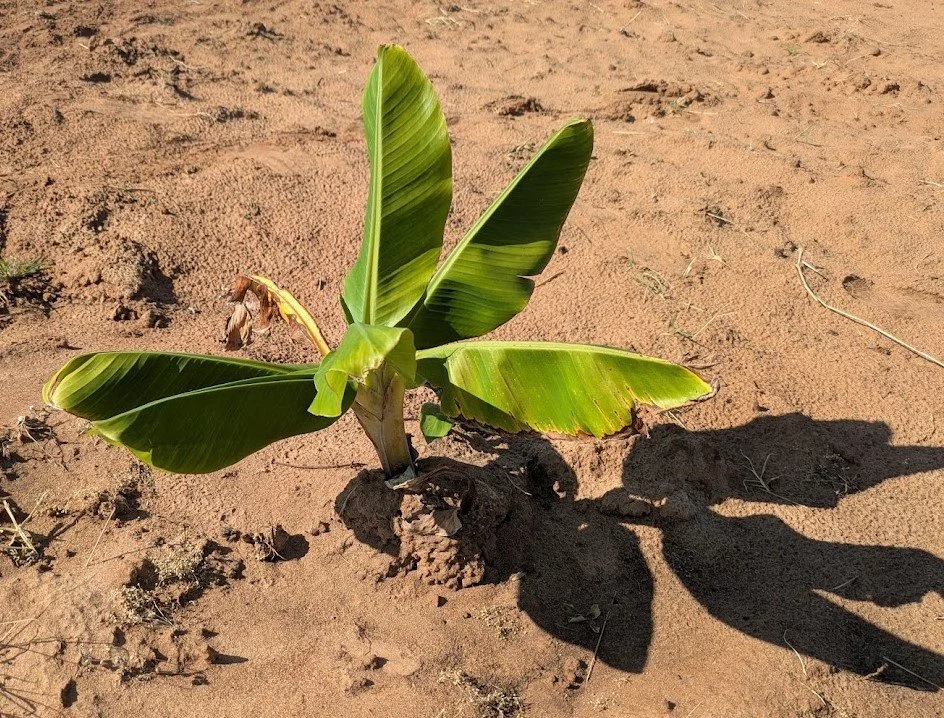
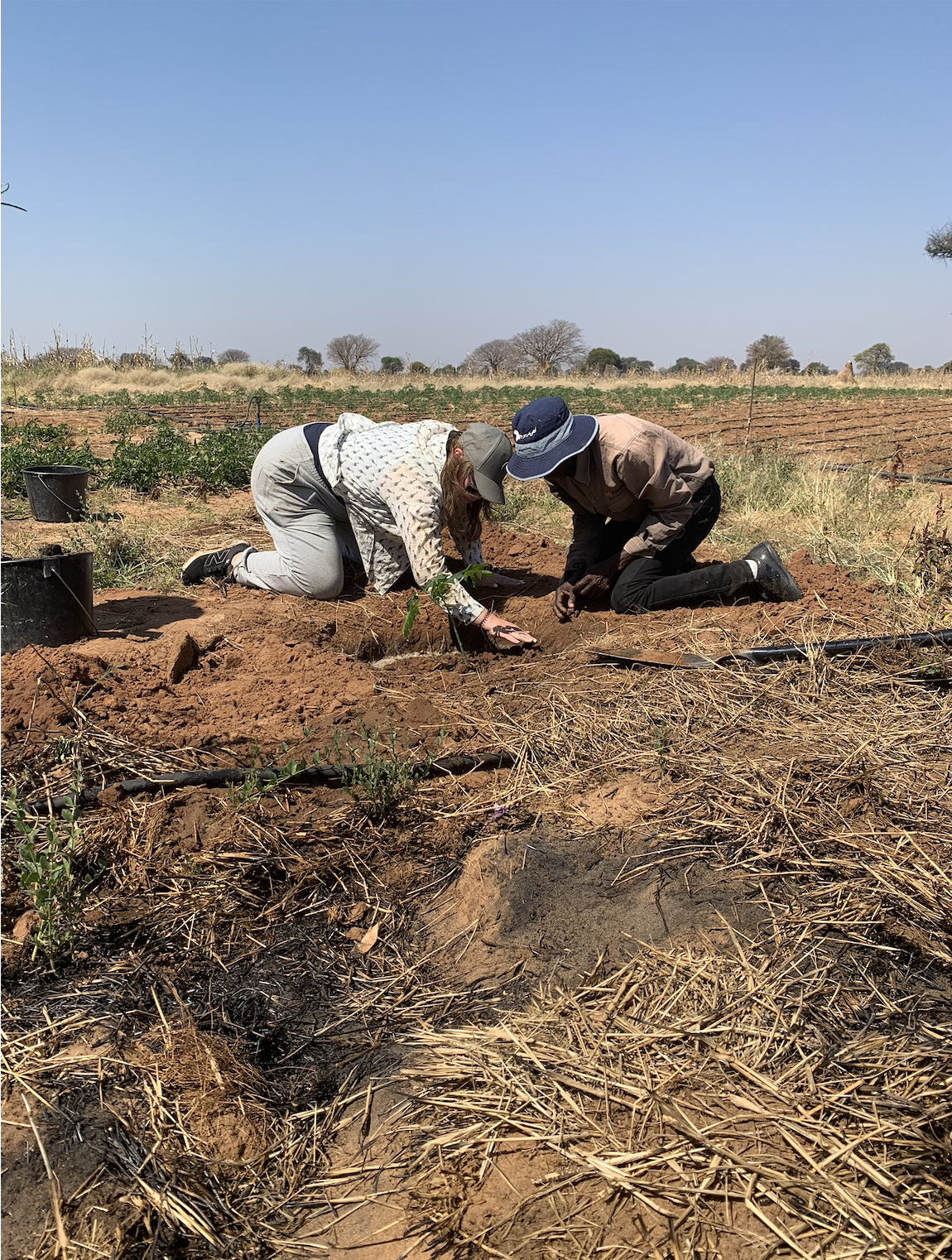
Katharina and Joseph planting a fruit tree. Hopefully it takes root as well as this banana tree nearby.
Of course, farming remains a challenge. Late rains or locusts can quickly put a harvest at risk. But we could see that, with a lot of commitment and new ideas, things are moving forward.
100 Children – and a Big Batch of Peanut Butter
A topic that always concerns us is making sure the kindergarten children get enough, well-balanced nutrition.
In our school feeding program, peanut butter is an important plant-based source of protein for preventing malnutrition, but it has to be bought and is expensive. So, together with the MMF team, we looked into whether there are alternatives that can be made locally – for example, spreads made from beans or cowpeas, combined with moringa.
Now we want to try out what actually works well in everyday life and what the children like to eat.
To make sure the children are well provided for right away, we first bought a large quantity of peanut butter at the supermarket in Rundu, which will unfortunately only last about 100 children until the middle of this month.
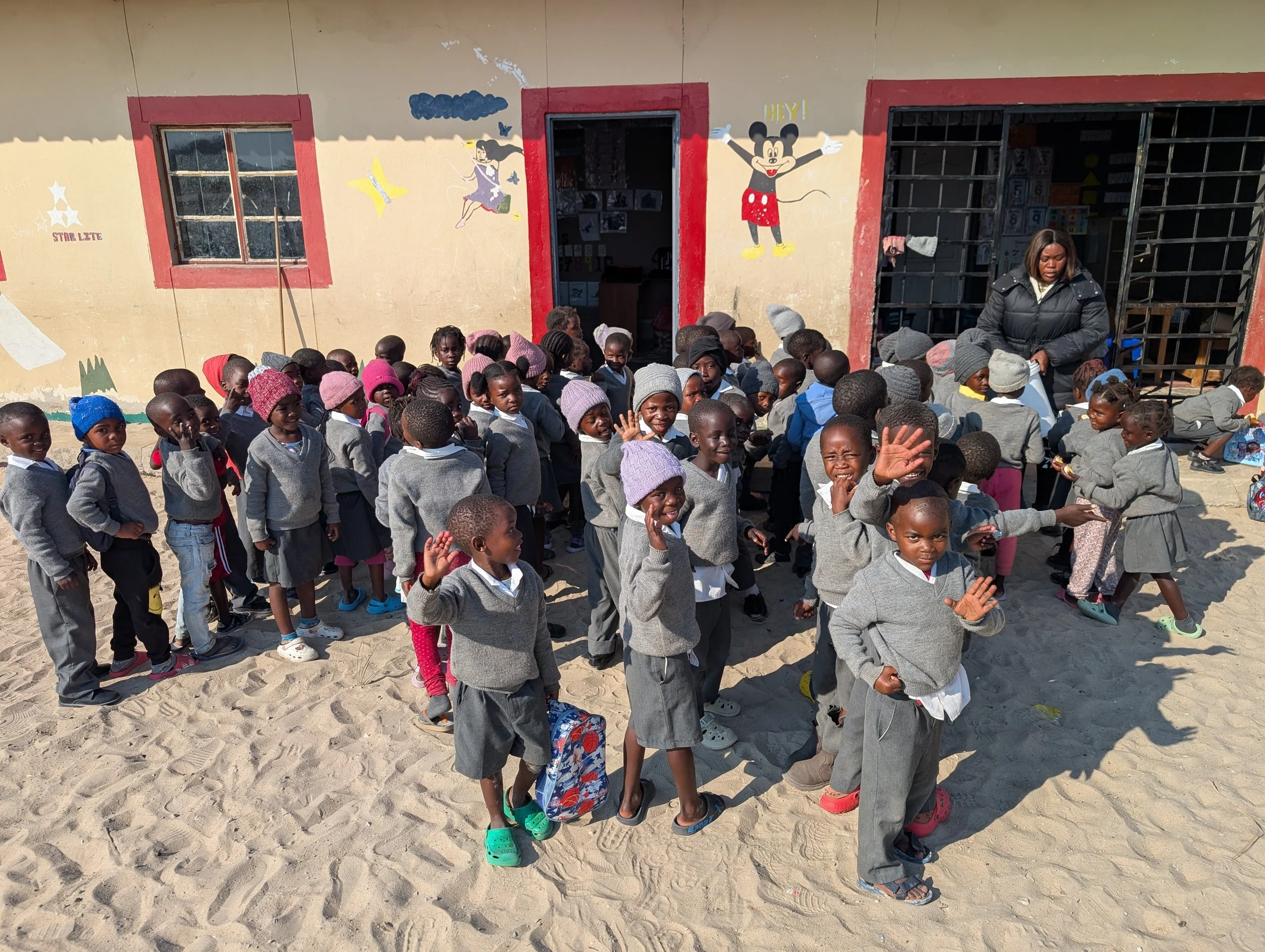
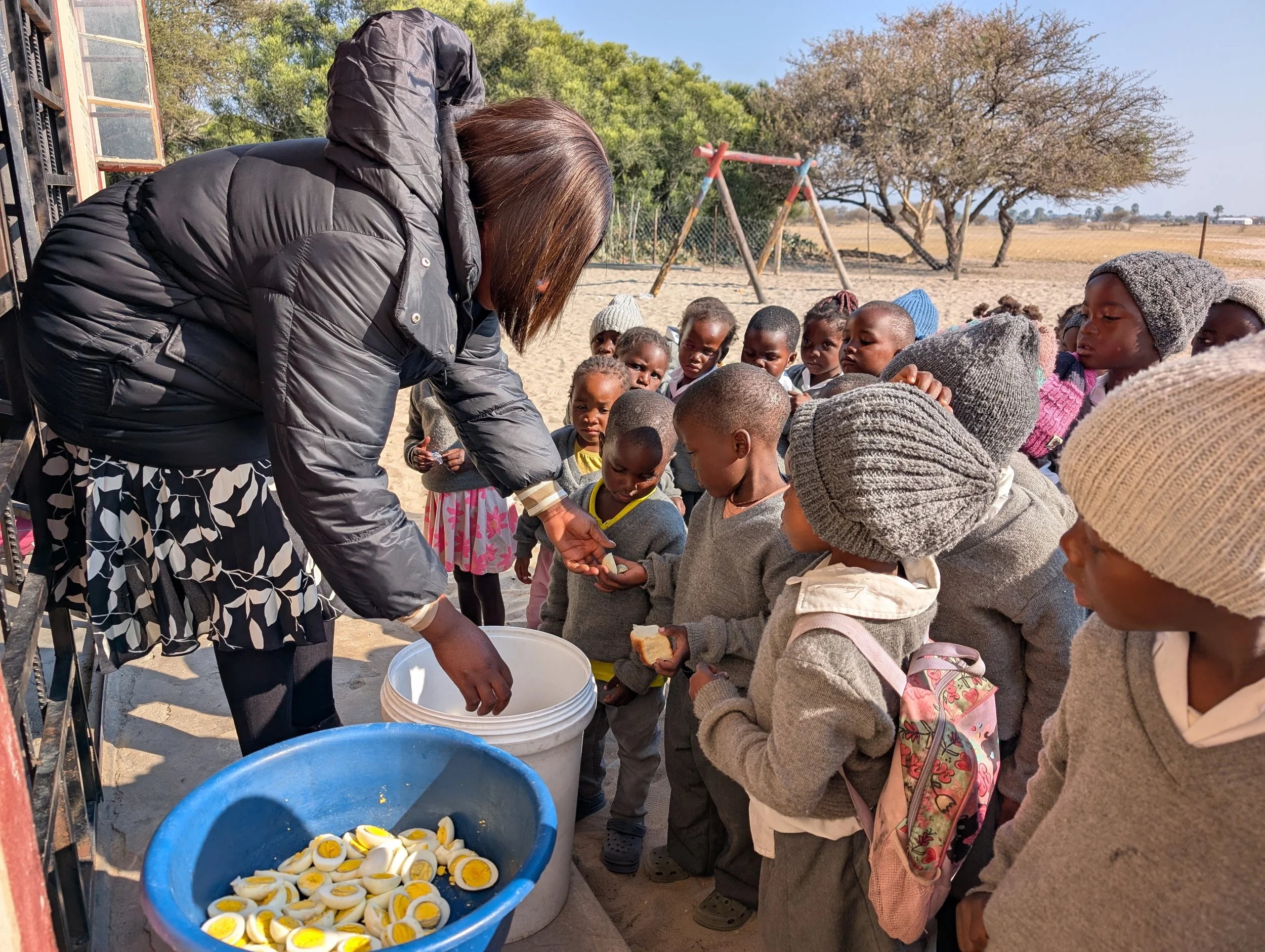
Breakfast at the kindergarten: eggs from our chicken-coop project being handed out
Getting Our Hands Dirty, Not Just Talking
Altogether, our stay was a good mix of conversations, planning, and hands-on work.
There is still plenty to improve at the kindergarten. Since it gained official recognition, the authorities have been placing growing demands on its buildings and facilities. The playground also needed improvement.
The swings got new seats made from old tires and sturdier chains. And then something new was built: a wobble bridge.
Digging postholes into the hard ground, attaching crossbeams and then fitting the tires was quite sweaty work in the heat. But once the bridge was built and painted, the effort was quickly forgotten.
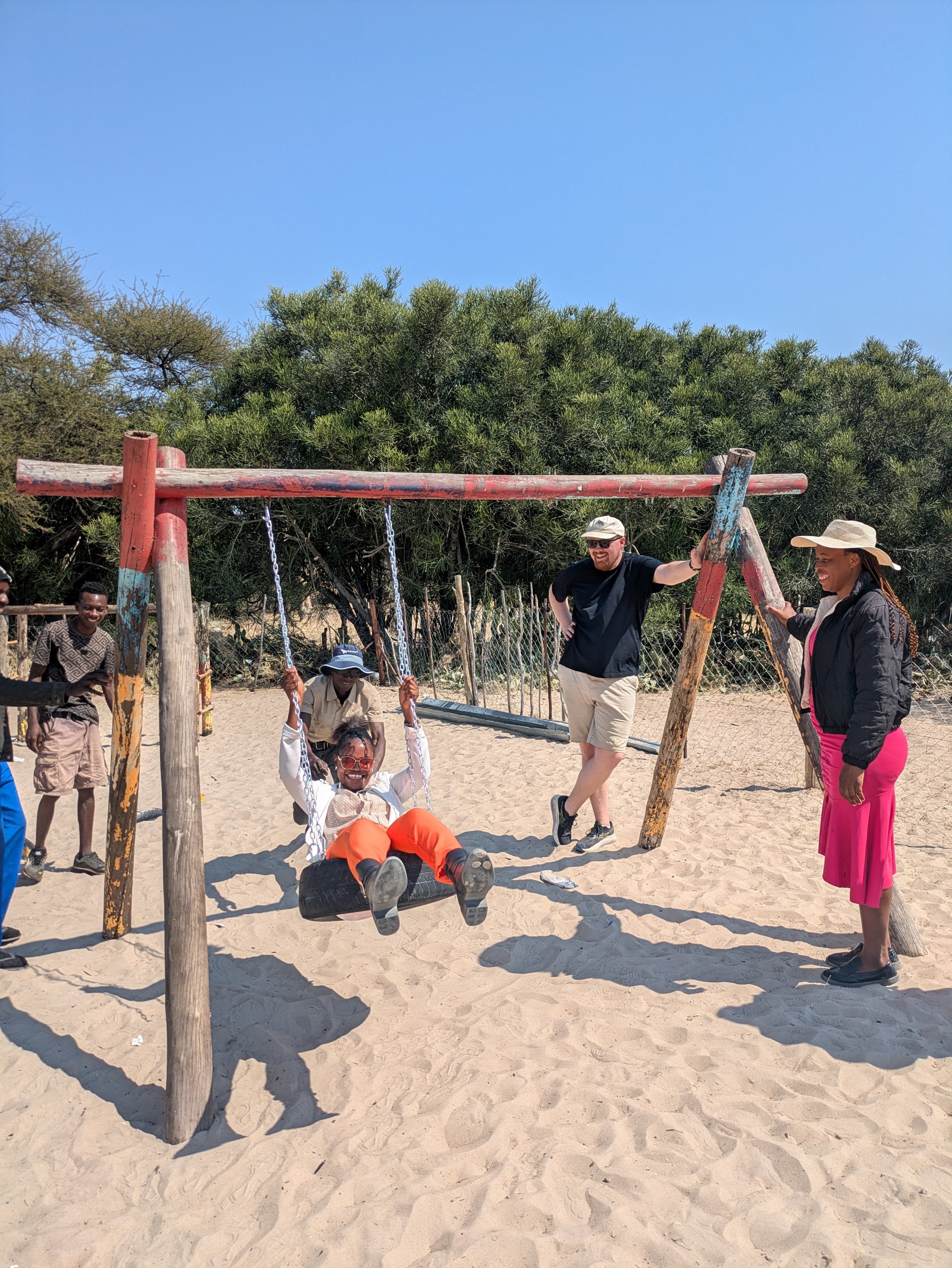
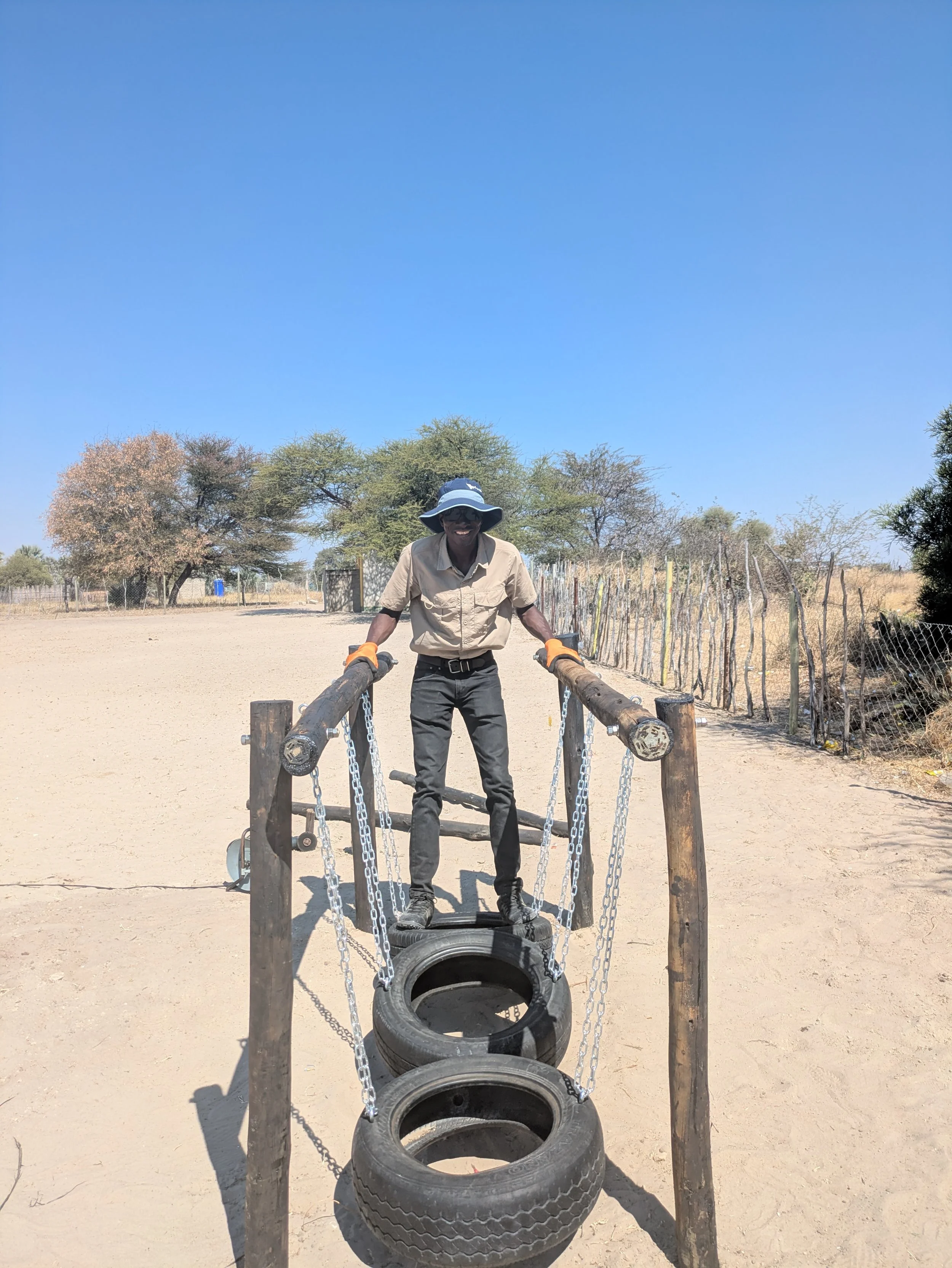
The teachers and Joseph carried out the quality control – and it was evidently passed with flying colors.
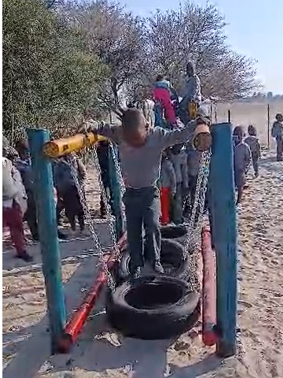
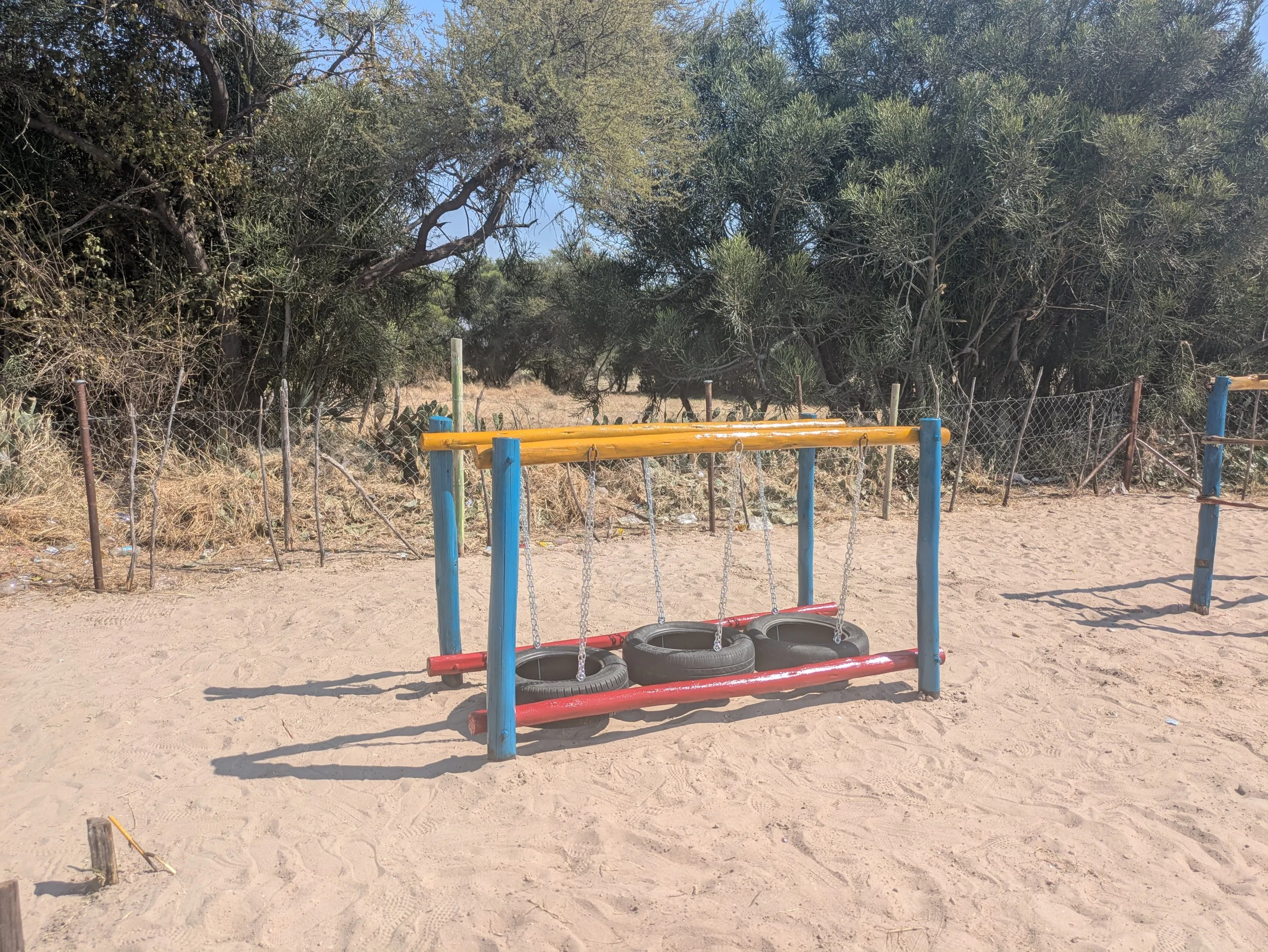
The teachers and Joseph carried out the quality control – and it was evidently passed with flying colors.
The children, in any case, were thrilled!
Sometimes it doesn't take much: a few tires, some wood, paint, working together – and plenty of beaming children's eyes.
It's About People
The next challenge ahead will be the demand, raised by government inspectors, that the kindergarten be connected to running water.
Our conversations also touched on some less straightforward topics:
The outstanding parent contributions (35 NAD, about 2 EUR, per month) for the kindergarten continue to occupy us. At a meeting with the parents, which we were also able to attend, the MMF team agreed that from now on contributions must be paid in advance each trimester (essentially as an enrollment fee). Otherwise, the children will be sent home again.
Why are the parent contributions so important? They are what pays the teachers. For legal reasons, MCP is not allowed to pay salaries. Without the parents' contributions, the kindergarten cannot be run sustainably in the long term.
The handicraft project Sit & Knit also needed some discussion. Differing ideas about the children's sweaters (correct sizes and appearance) and some communication problems between the teachers and the knitters had led to frustration on both sides.
What mattered to us in these conversations was this: MCP wants to give people in Mayana the opportunity to contribute to the community with their own skills and build something of their own. The point is not to buy clothing cheaply manufactured in the Far East. But of course, the sweaters in particular need to fit the children.
Afterwards, Sabine was able to share a few tips from her own knitting experience with Martha, who leads the Sit & Knit team. We also found a nearby course to help improve knitting skills. The possibility of acquiring and using a sewing machine is being considered.
Young People with Ideas for Their Future
We were especially pleased by another topic that came up: young people in Mayana thinking about their professional future.
The situation is difficult. Many well-educated young people cannot find work after finishing their studies or training; youth unemployment in the region stands at over 60%. Some of them therefore want to build something of their own.
The ideas range from a tutoring center and computer courses to making greater use of the MCP Guest House for travelers.
What impressed us most about this: These young people want to take charge of their own future while also doing something for their community.
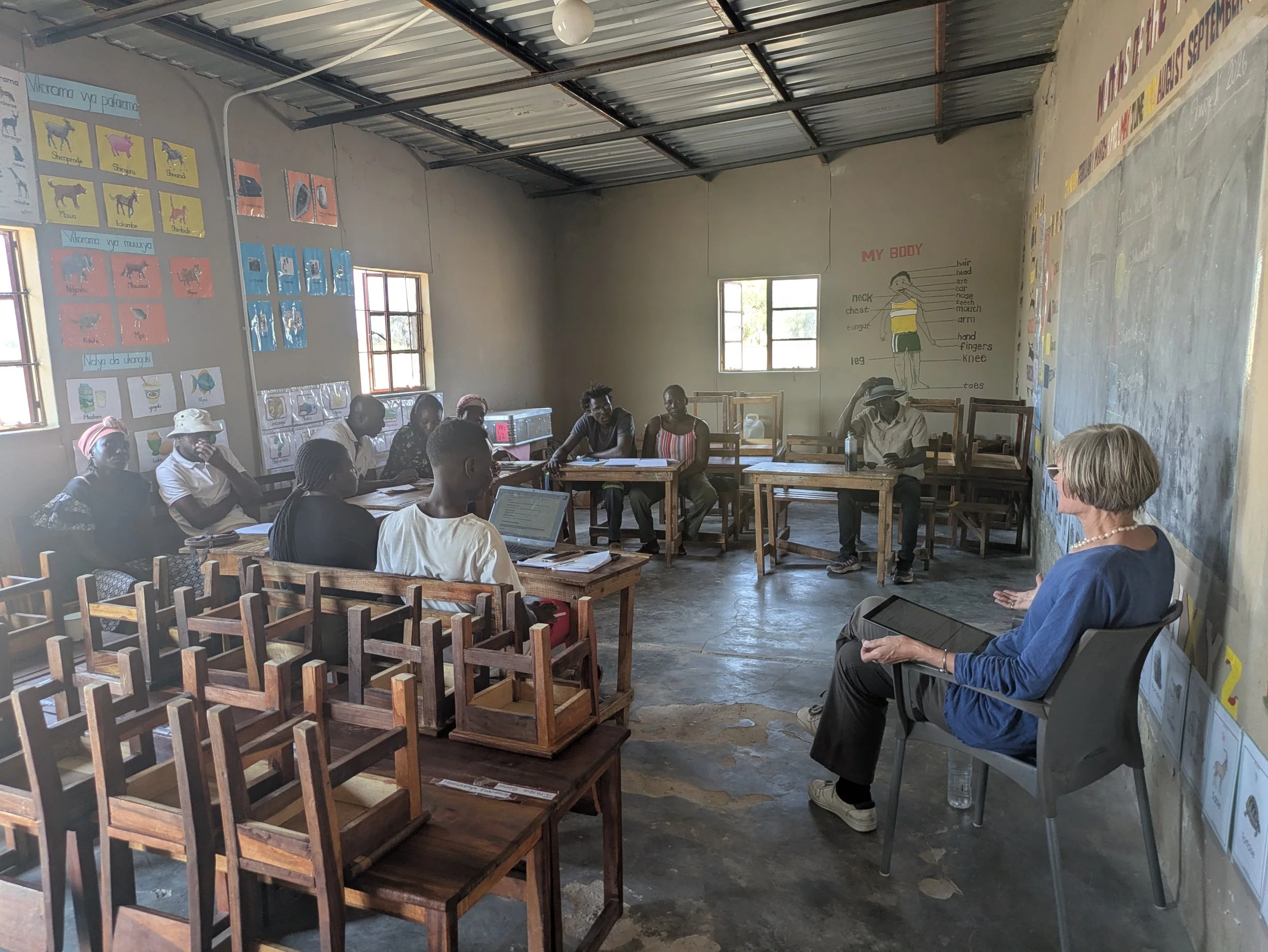
Business plan workshop at the Centre
But a good business idea alone isn't enough. Many don't know how to turn one into a business plan. So we quickly put together a small workshop. Despite the short notice, nine interested people came. Together we talked about what goes into a business plan and how an idea can become a viable venture. Perhaps that afternoon was the start of something new. We're curious to see!
Visiting the Village Headman and the Hompa
Naturally, no visit would be complete without a meeting with Berthold, the village headman. He has accompanied and supported the work of MCP and MMF for many years and is always curious about what we have planned.
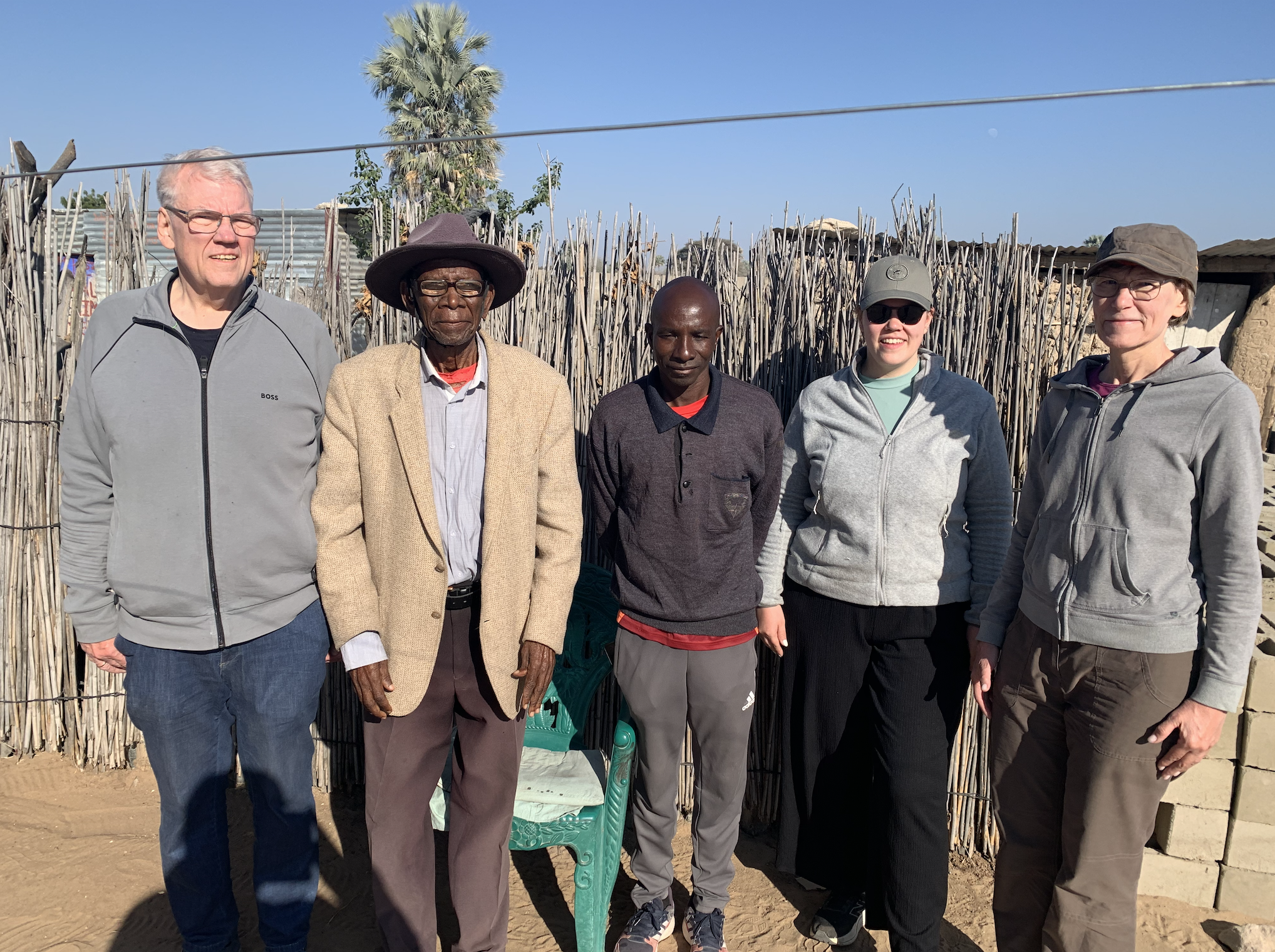
A very special experience was the audience with Hompa Sofia Mundjembwe Kanyetu, the Queen of the Shambyu.
Joseph had organized this meeting for us. It was a special honor to be able to present our collaboration with MMF in person and to hand over the brochure marking MCP's tenth anniversary.
For the audience, Katharina and Sabine were dressed by Joseph's wife Martha in a traditional cloth. This, too, was a lovely gesture of hospitality.
No photos were taken during the audience, by the way – that would have been inappropriate. Some encounters simply remain personal memories.
Farewell with the Feeling: We'll Be Back
The ten days in Mayana passed far too quickly.
We discussed a great deal, put some things into practice, and above all had a great many conversations. In doing so, we gained new insights and came to understand better where the opportunities, but also the difficulties, of the various projects lie.
And that is exactly why such visits are so valuable.
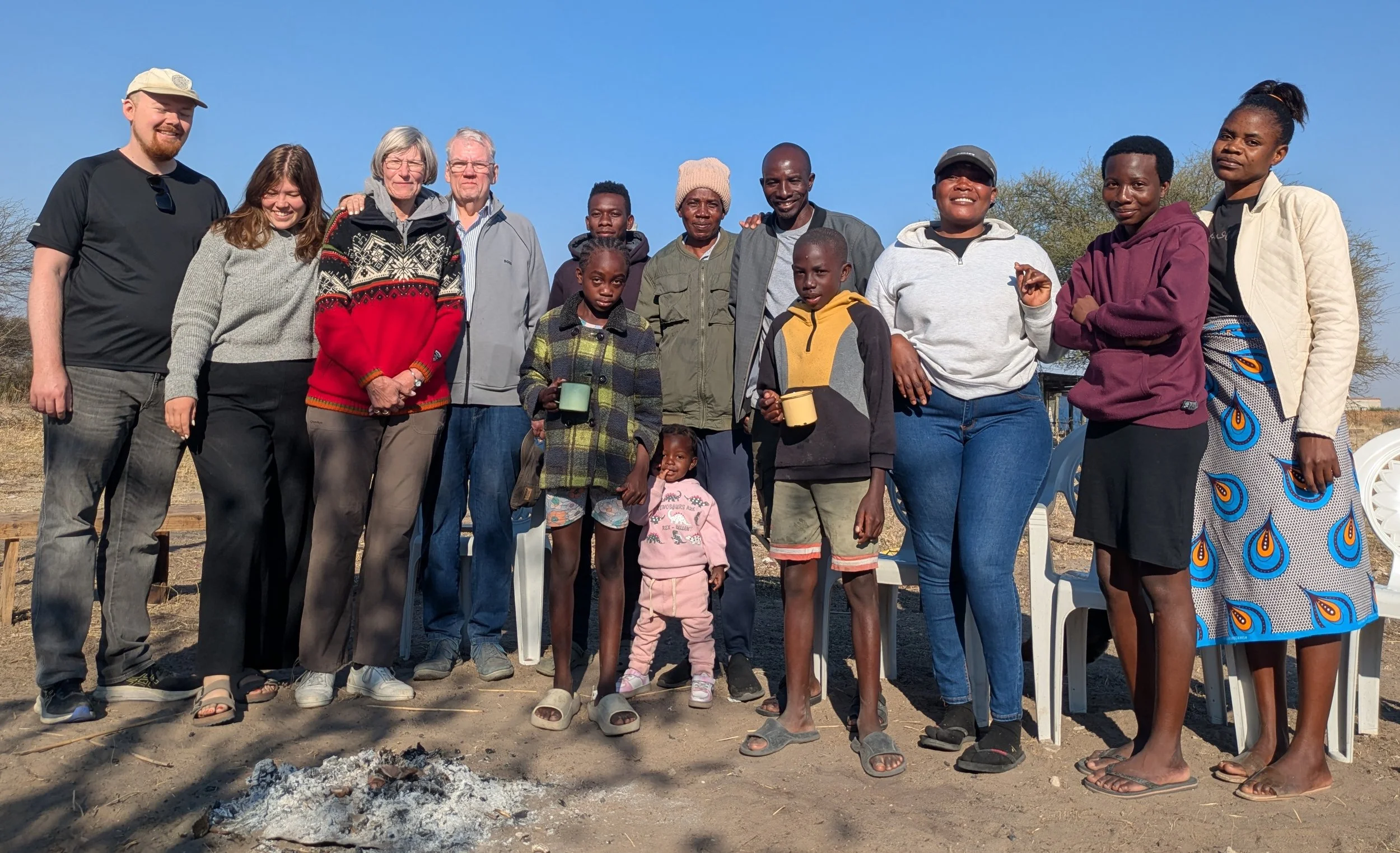
Because as important as our regular phone meetings are: nothing can replace meeting in person.
You have to walk through the garden together, look at the new trees, talk with the teachers, build a playground together, discuss ideas with young people, and sit down together for a meal in the evening.
That builds closeness. It builds understanding. And it gives us new energy for our continued collaboration.
We came back from Mayana with many wonderful memories – and with plenty of ideas in our luggage. We thank all our members and supporters from the bottom of our hearts for making this work possible, and we hope for your continued support!
We hope to see you again!
Warm regards
Katharina, Andreas, Sabine and Florian